

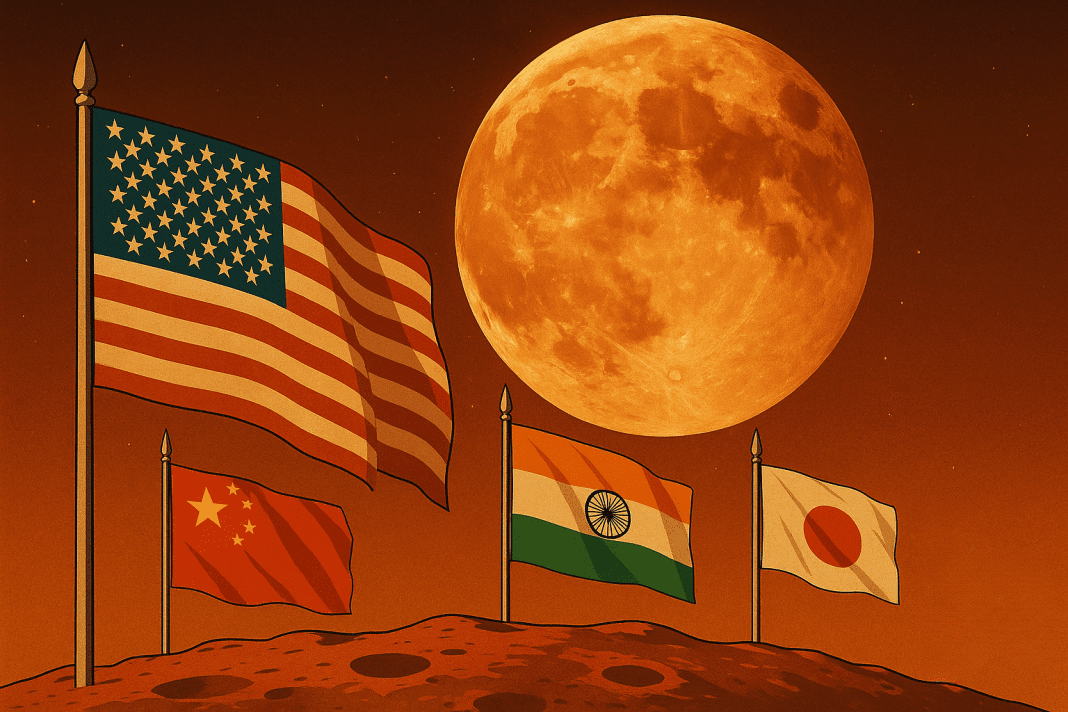

In 1969, landing on the moon was about planting a flag. A symbol for our national pride, showing the world what America could do. In 2025, it’s no longer personal… It’s business. Countries around the world are now racing to the moon again! Besides building the first moon base, going to the moon this time around is mostly for the vast economic opportunities and to claim territory. This new moon race is less about exploration and more about exploitation, whoever gets there first gets to decide what the future of space looks like.
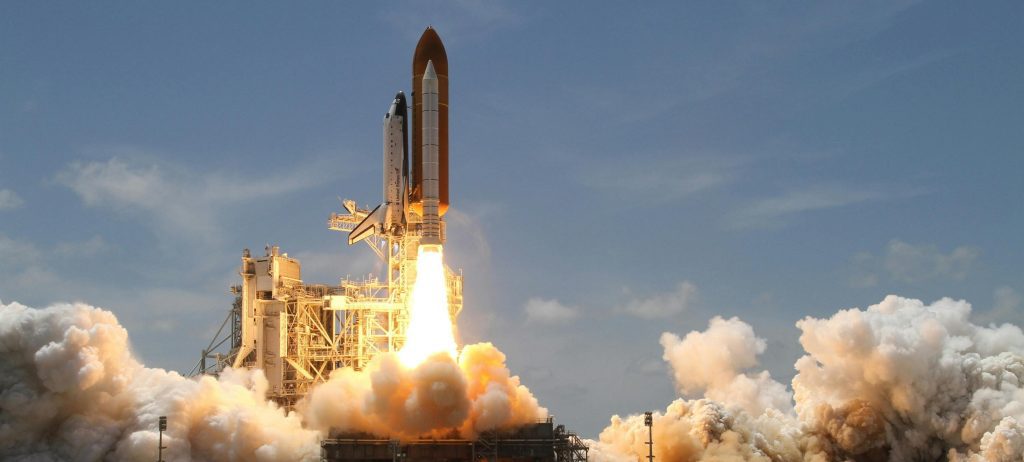
The Cold War lasted from the late 1940s until the Soviet Union collapsed in 1991. It was less a shooting war and more a decades‑long standoff between the U.S. and the USSR, fought through politics and propaganda, including the race to space. In 1957 the Soviet Union launched Sputnik, which was the first satellite to be sent into space. This freaked out the U.S. because this meant that suddenly the USSR had rockets that could reach anywhere on earth. Launching Sputnik ignited the original space race, which was a contest where science and exploration were pushing boundaries, but national pride and technological dominance were the real goals. Landing on the moon in 1969 wasn’t just about discovery; it was to show America’s dominance.
Today, the moon race returned, Instead of just two nations fighting for dominance, the race involves many big nations and private companies all eyeballing the moon for its real estate and resources.
- United States: NASA’s Artemis program is planning a crewed landing in 2026 with Artemis III, also aiming to have a permanent presence on the moon as a stepping stone to Mars missions
- China: Plans for a crewed lunar mission by 2030 with the China National Space Administration’s (CNSA)’s Chang’e rockets, They’re targeting the South Pole for its resources and plan to develop a lunar base.
- India: Aiming for a sample return mission by 2027 with the Indian Space Research Organisation (ISRO)’s Chandrayaan‑4 rocket. Overall pushing for more human landings.
- Japan: Aside from the relationship the Japan Aerospace Exploration Agency (JAXA) has with NASA, Japan has many ties with private companies like Toyota which is building a lunar rover, and Mitsubishi which is building the H3 Rocket, which will be Japans flagship rocket.
- iSpace: One of the most advanced lunar commercial players. They are pushing the private sector roles on the moon, especially non-U.S. roles.
- Others: The UAE, South Korea, Luxembourg, Israel and more have all launched or planned moon missions with economic or strategic motivations.
It’s no longer just a race; it’s a scramble for a limited piece of real estate.
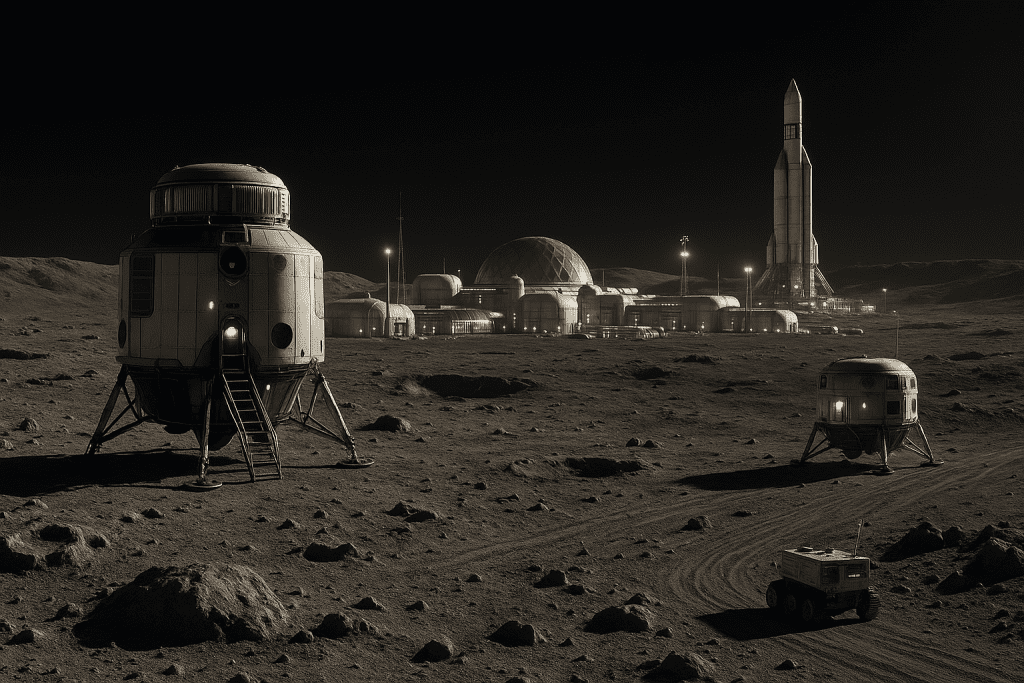
Jet Propulsion Laboratory, a federally funded research and development center, estimates that there are hundreds of billions of dollars in resources just sitting on the moon.
Helium-3 is a rare, non-radioactive isotope of helium. It’s attractive because it could theoretically be used in nuclear fusion reactors, providing huge amounts of clean energy without the radioactive waste of traditional fusion fuels. Helium-3 typically costs $20 million per kilogram, and estimates suggest there are about 1 million metric tons of helium‑3 on the Moon! To put that into perspective, 1 ton of helium‑3 could theoretically power a city for a year!
Water on the moon also is a bigger deal than it seems. Aside being important for human survival, separating the Oxygen from H2O allows for breathable air, and using the hydrogen + Oxygen means you can also make fuel, allowing the moon to become a refueling station. One 2020 study suggested up to 330 million metric tons of ice could be hidden in permanently shadowed areas, like craters.
Aside from Water and Helium-3, the moon is rich in rare earth elements, all hidden within the moon terrain and rocks. In a nutshell, though, the moon is basically a giant pit stop and gas station for deep space!
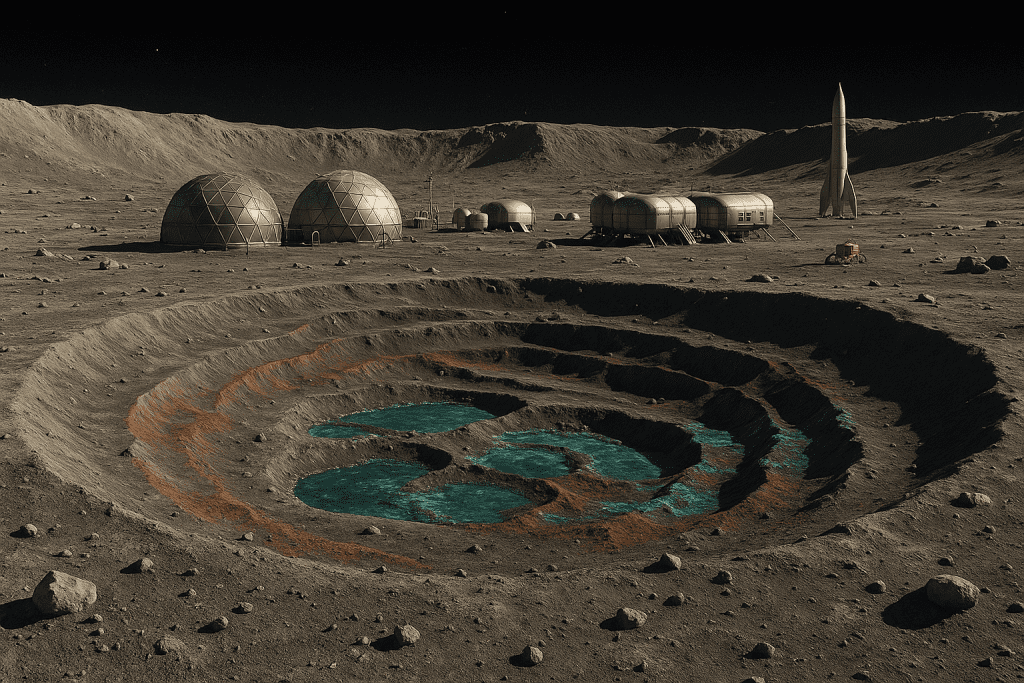
There is no governing body on the moon, it is the wild west out there, it is basically first come, first served. So whoever gets there first and controls the moon could: own resource extraction rights, getting rich off the moon’s resources, They could control future space launches, since it will be cheaper to launch a rocket from the moon thanks to its low gravity. Finally, they would set the stage for off-earth economies. The stakes are pretty high.
All of these factors have led to some tension as nations race to the moon. There are two main factions competing in this race, The Artemis Bloc and The ILRS Bloc.
The Artemis Bloc is U.S. led and joined by 35+ countries such as Japan, Canada, Europe, and many more, it also has support from many private companies like SpaceX, Blue Origin, Toyota, etc… The goals of the Artemis Bloc is to:
- put man back on the moon by 2026
- Build a Lunar Gateway (an orbiting space station)
- Establish a South Pole base.
- Mine water for fuel
- Test Mars technology
The Artemis Bloc also wants a more diplomatic approach, promoting “rules-based” space conduct. They made the Artemis Accords, a set of international agreements created by NASA and the U.S. in 2020 to set ground rules for space exploration. Essentially a space peace treaty. Other countries critiqued the Artemis Accord saying it was U.S. dominated, wanting a United Nations led framework rather than and U.S. Led Coalition. Giving birth to competition called the ILRS Bloc.
The ILRS Bloc, led by China and Russia, is joined by states like Venezuela, Pakistan, South Africa and more. They are typically joined by emerging economies that are not aligned with the U.S. The goals for the ILRS Bloc is to:
- Build the International Lunar Research Station (ILRS) by 2035
- Operate a robotic and crewed outpost on the moon’s South Pole.
- Use nuclear power to sustain operations
- Eventually mine resources like water and Helium-3
While the goals are similar between Artemis and the ILRS Bloc, there are big differences. The Artemis Accord is about the shared values of transparency, peace, data sharing, and no land claims. While the ILRS Bloc is more state controlled, with China and Russia leadership with plans to potentially have strategic military control over moon infrastructure.
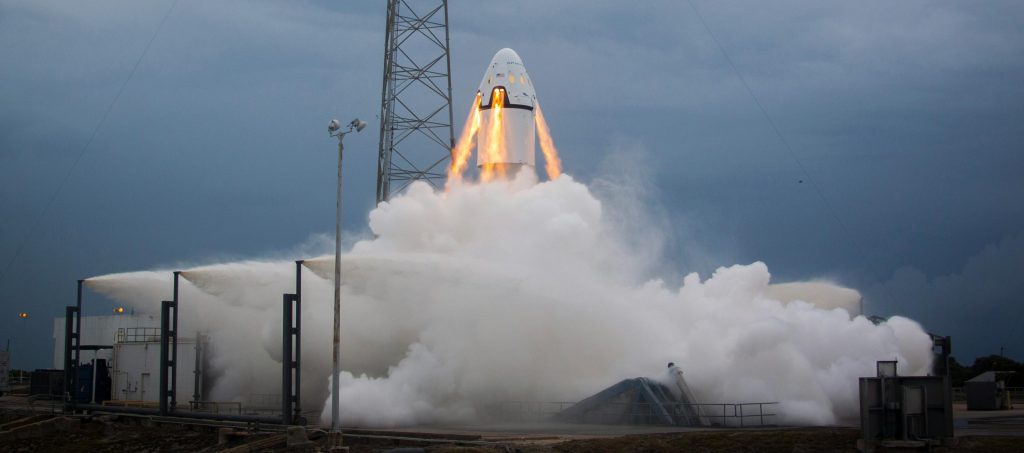
As for companies, the moon is a new market. SpaceX, Elon Musk’s aerospace company, has emerged as NASA’s top partner with a $4.2 billion contract to build the Human Landing System for the Artemis missions. Their massive Starship lander is critical to getting astronauts back on the lunar surface. Meanwhile, Blue Origin, backed by Amazon founder Jeff Bezos, secured a $3.4 billion deal to develop a competing lunar lander, ensuring NASA has multiple options moving forward. Internationally, JAXA (Japan’s space agency) is building the Lunar Cruiser rover in partnership with Toyota, while India’s LUPEX mission is developing a lander and rover to explore the Moon’s South Pole. These companies, alongside hundreds of others, aren’t just exploring space, they’re helping build the infrastructure of a future lunar economy, and the Artemis Bloc is where the money is moving first.
So why is the race to the moon happening now in 2025? In the 1960s, putting anything into space cost billions and required government-scale infrastructure. But today, thanks to advancements in materials science and reusable rockets, the cost of getting to space has dropped dramatically. The SpaceX’s Falcon 9, for example, can relaunch multiple times, cutting launch costs by over 80%.
The Moon has become the new arena for geopolitical dominance, especially between the U.S.-led Artemis Bloc and the China\Russia ILRS Bloc. Just like the Cold War space race, the current one is about and the first-mover advantage in order to gain influence. Whoever controls lunar water may dominate off-Earth infrastructure and future fuel supply chains. This isn’t just about science, it’s about strategic leverage
Unlike the Cold War, today’s space race includes private sector giants who can innovate faster and operate cheaper than government agencies. NASA doesn’t build rockets anymore, it hires companies like SpaceX and Blue Origin to do it. This model has unlocked market competition, turning the Moon into a business opportunity.
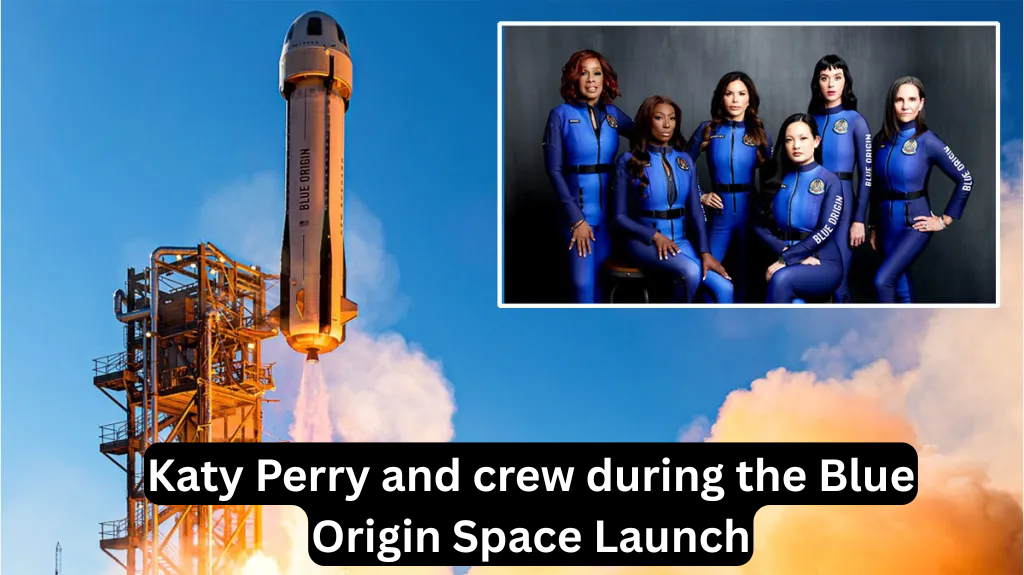
The next 10 years are going to completely reshape how we think about the Moon. Artemis III in 2026 will bring astronauts back on the moon, including the first woman, and person of color. Permanent bases will be constructed by Artemis starting in 2028-2030. These bases will test life support and mine resources, basically laying the groundwork for long stays. Water prospecting and mining, the Lunar Rover developed by LUPEX will map and analyze the moon for water. The moon will then become a launchpad for deeper space, as NASA begins testing systems for Mars travel. A real Lunar Economy will soon start taking shape as more and more private companies get involved.
As this race to the moon grows and projects develop, space politics will get messy, legal conflicts will emerge about who owns what. The divide between Artemis and ILRS will grow and possibly lead to a space war (Highly Unlikely).
Ultimately, by 2035 we can expect 2-3 Lunar Bases, each of which are staffed and exchanging scientific research and sharing resources. There will be regular flights to the moon, even some commercial ones. Companies will be there to mine ice and deliver cargo. The moon will become a living and working outpost for humanity.
This time, we’re not going to the Moon to explore it, we’re going to own it.






Super reliable platform. I’ve tried many others but this one feels the most secure and honest. The rewards are awesome too. vnvic88
Finally found a way to get the app running without any glitches. The installation was a breeze and the experience is top notch. Check out 567winappdownloadapk if you want a seamless mobile setup.
Thank you for your sharing. I am worried that I lack creative ideas. It is your article that makes me full of hope. Thank you. But, I have a question, can you help me?
Making the switch to this platform was easily the best move I made this season. The loyalty scheme rewards consistent play with perks that actually matter and the leaderboard contests operate with total fairness. My cash out arrived quicker than expected and everything runs perfectly on my tablet. Thank you for such a fantastic experience. bdnm777
I’ve been playing here for a few weeks now and the experience is super smooth. The bonuses are actually fair and the payouts are quick. Definitely check out vnos88 if you want a reliable spot.